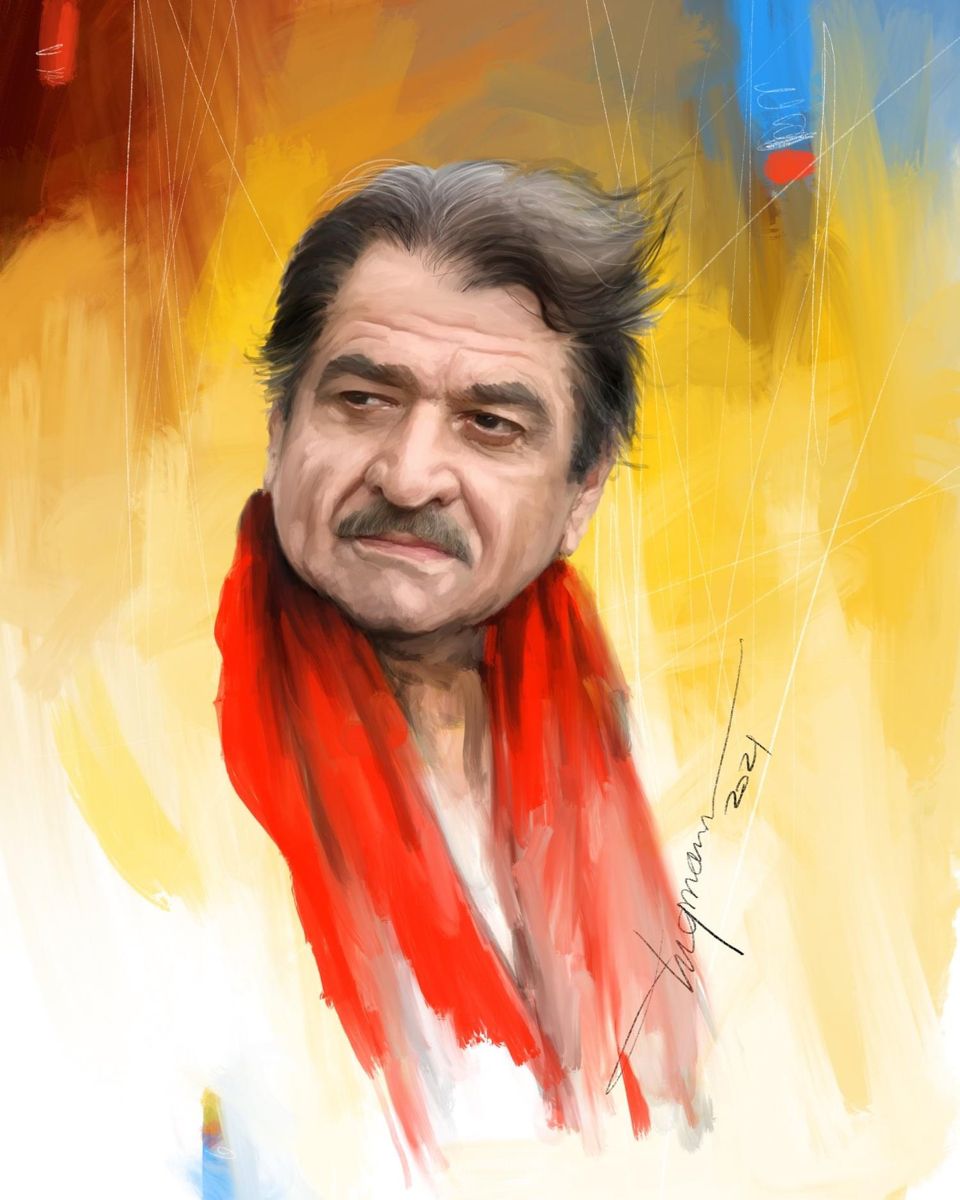
Click to enlarge
Sherko Bekas
About This Attraction
Sherko Bekas was a prominent Kurdish poet widely regarded as one of the founders of contemporary Kurdish poetry and the greatest Kurdish national poet of the 20th century. His work is known for its innovation in form and its deep engagement with the social and political struggles of the Kurdish people.
Life and Career
Early Life and Influence: Born in Sulaymaniyah, Iraqi Kurdistan, on May 2, 1940, Sherko Bekas was the son of another respected poet, Faiq Bekas. He published his first poem at age 17 and was deeply influenced by his father's legacy and the rich cultural environment of his hometown.
Political Engagement and Exile: Bekas joined the Kurdish liberation movement in 1965, working for the "Voice of Kurdistan" radio station. Due to political pressure from the Iraqi regime, he was forced into exile in 1986 and lived in Sweden from 1987 to 1992. He returned to Kurdistan in 1992 and briefly served as the Minister of Culture in the first cabinet of the Kurdistan Regional Government.
Innovations in Poetry: In the 1970s, Bekas co-founded the Rwanga Group, which was instrumental in modernizing Kurdish poetry. He introduced new styles, including "Rûwange" (vision), which broke from traditional rules like rhyme, and the "poster poem," a form using concise imagery to explore complex themes.
International Recognition: His works have been translated into multiple languages, including English, Arabic, Swedish, and Italian. He received international accolades, such as the Swedish PEN's Tucholsky Prize in 1988, and was named an honorary citizen of Milan, Italy.
Key Themes
Bekas's extensive body of work, spanning over 40 collections of poetry, explores universal themes through the lens of the Kurdish experience.
Freedom and Resistance: He is known as a "poet of resistance," with freedom being a constant thread in his work. One famous excerpt reads: "If you take away freedom, / My whole year will die and so will I".
Homeland and Identity: His poetry fiercely defended and yearned for Kurdistan, grappling with the complexities of national identity and the commemoration of tragedies like the Halabja chemical attack and the Anfal genocide.
Humanity and Nature: Beyond national struggles, his poetry also touched upon love, life, the role of women in society, and the exploration of the human condition and nature.